
Key Takeaways
- Heritage Priority: Original Victorian timber floorboards are a non-renewable architectural asset; professional restoration adds significant value to period UK homes.
- Grit Sequence: Aggressive levelling starts with 40-grit Zirconia on a Bona Belt to strip decades of toxic bitumen and paint.
- Thermal Efficiency: Modern tradesmen use resin gap filling or timber slivers to eliminate draughts and improve home heating retention.
- Professional Finish: Bona Traffic HD provides world-class durability while maintaining the natural honey-toned aesthetic of heritage pine.
The Problem: Neglected Heritage and the Bitumen Battle
Many homeowners in London and across the United Kingdom are sitting on a hidden masterpiece: original Victorian pine floorboards. However, the Problem is that these 19th-century features are often obscured by layers of toxic black bitumen, lead-based paints, or heavily soiled carpets. Bitumen, commonly used as a damp-proofer or edge-frame for rugs a century ago, is notoriously difficult to remove. It is brittle, sticky when heated, and destroys standard sanding belts instantly. Beyond aesthetics, the wide gaps between neglected boards act like a highway for cold air, leading to massive heat loss and increased energy bills, plus the added burden of VAT on inefficient heating.
The Agitation: The Risks of Poor Heritage Restoration
The Agitation for homeowners is the fear of irreversible damage. Victorian pine is a relatively soft timber compared to modern oak. Attempting a DIY restoration with hired drum sanders often leads to deep gouges, chatter marks, and excessive thinning of the boards. Non-specialist contractors may use generic varnishes that yellow over time, turning beautiful pine into an unsightly orange. Furthermore, the dust generated from old lead paint or bitumen is a major health hazard. Without professional-grade Bona Vacuum Dust Extractors, your home will be covered in fine particulate matter that can linger for months. For more on safe sanding, read our guide on professional floor sanding services.
The Solution: A Technical Masterclass in Pine Restoration
The Solution is a methodical, multi-disc restoration approach carried out by specialist tradesmen. We begin with a technical assessment of the moisture content to ensure the timber is stable. If the boards are severely uneven or cupped, we employ a diagonal sanding technique at a 45-degree angle to the grain. This is the only way to level the floor without removing too much of the precious wear layer. Our primary machine for this is the Bona Belt, which provides the necessary weight and precision for heritage timber.
Pro-Tip: The Heritage Grit Sequence
On uneven Victorian pine, we never start higher than 40-grit. Specifically, we use **40-grit Zirconia** abrasives. Zirconia stays sharp longer and resists the heat build-up that causes bitumen to melt and gum up the paper. The sequence must be: 40 (diagonal) > 40 (parallel) > 60 > 80 > 100. For the final pass, we use a **Bona Flexisand** multi-disc machine to eliminate any microscopic drum marks, ensuring a surface that is tactile and perfectly smooth. This process prevents grain raising when the final lacquer is applied.
Resin Gap Filling and Thermal Integrity
To address the draughts, we perform a ‘full trowel’ gap fill. We collect the fine 80-grit dust from the pine itself and mix it with a high-strength resin like **Bona Mix & Fill Plus**. This ensures the filler matches the floor’s natural colour and expands/contracts at the same rate as the timber. For larger gaps, we may use reclaimed pine slivers. This not only looks superior but adds structural stability to the floorboards. To understand the costs involved, visit our floor sanding prices page.
Finishing with Bona Traffic HD: The Ultimate Shield
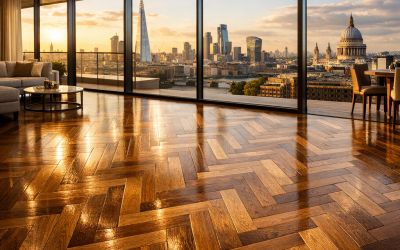
In the humid UK climate, the choice of finish is critical. We recommend **Bona Traffic HD**. This two-component water-based lacquer is dry to the touch in hours and reaches full chemical cure in just 7 days. We apply one coat of primer—essential to prevent **tannin pull** and side-bonding—followed by two or three coats of lacquer. This preserves the natural ‘honey’ tone of the wood while providing a surface that can withstand the rigours of modern life.
A beautifully restored Victorian floor is the centerpiece of any heritage home. Don’t hide your architectural history—restore it with the care it deserves. For a free site survey and a bespoke quote, contact our specialist tradesmen today. We are proud members of the National Wood Flooring Association (NWFA), ensuring your home is in safe hands.